




CONTEXT
The challenge
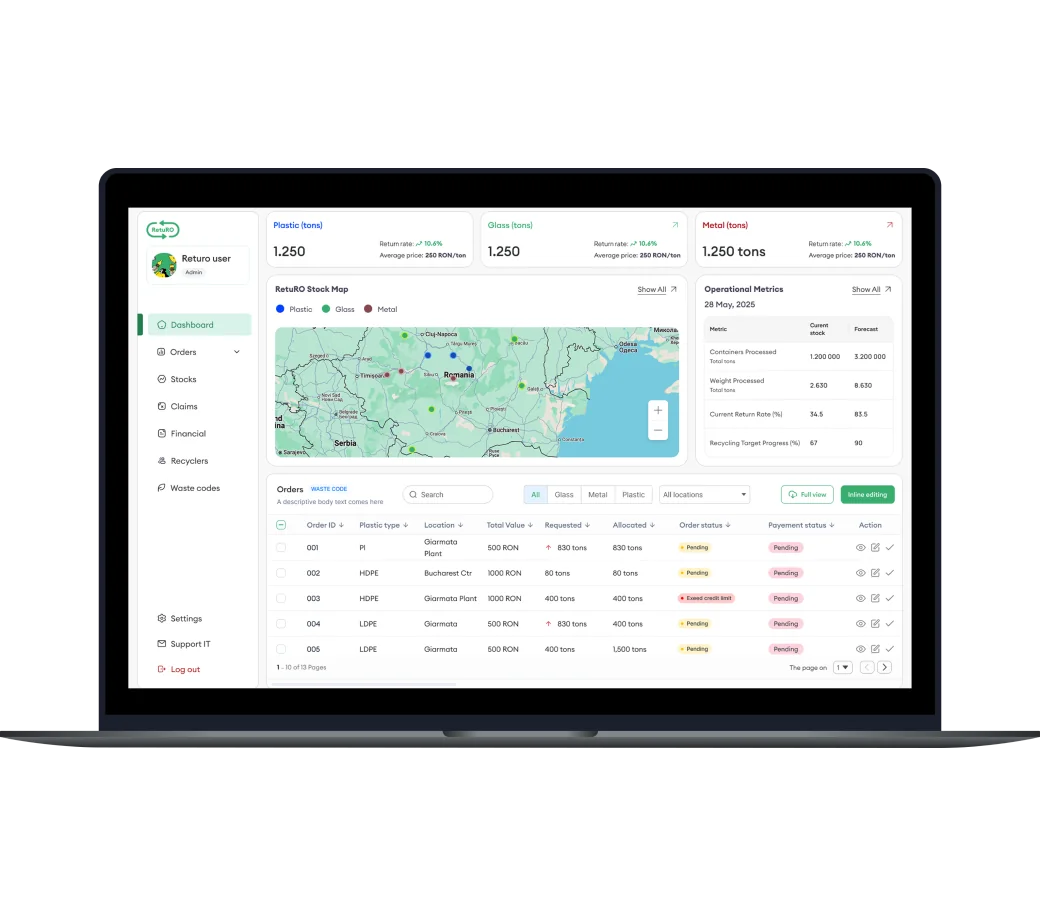
RetuRO SGR is Romania's government-appointed administrator of the national Deposit-Return System, managing the collection, sorting, and sale of plastic, metal and glass across multiple national centres. The project required a fully integrated platform connecting recyclers, commercial managers, and IT teams — with deep integration into Microsoft Dynamics and UI deliverables constrained by DRUPAL's rendering limitations.
My contribution
DISCOVERY
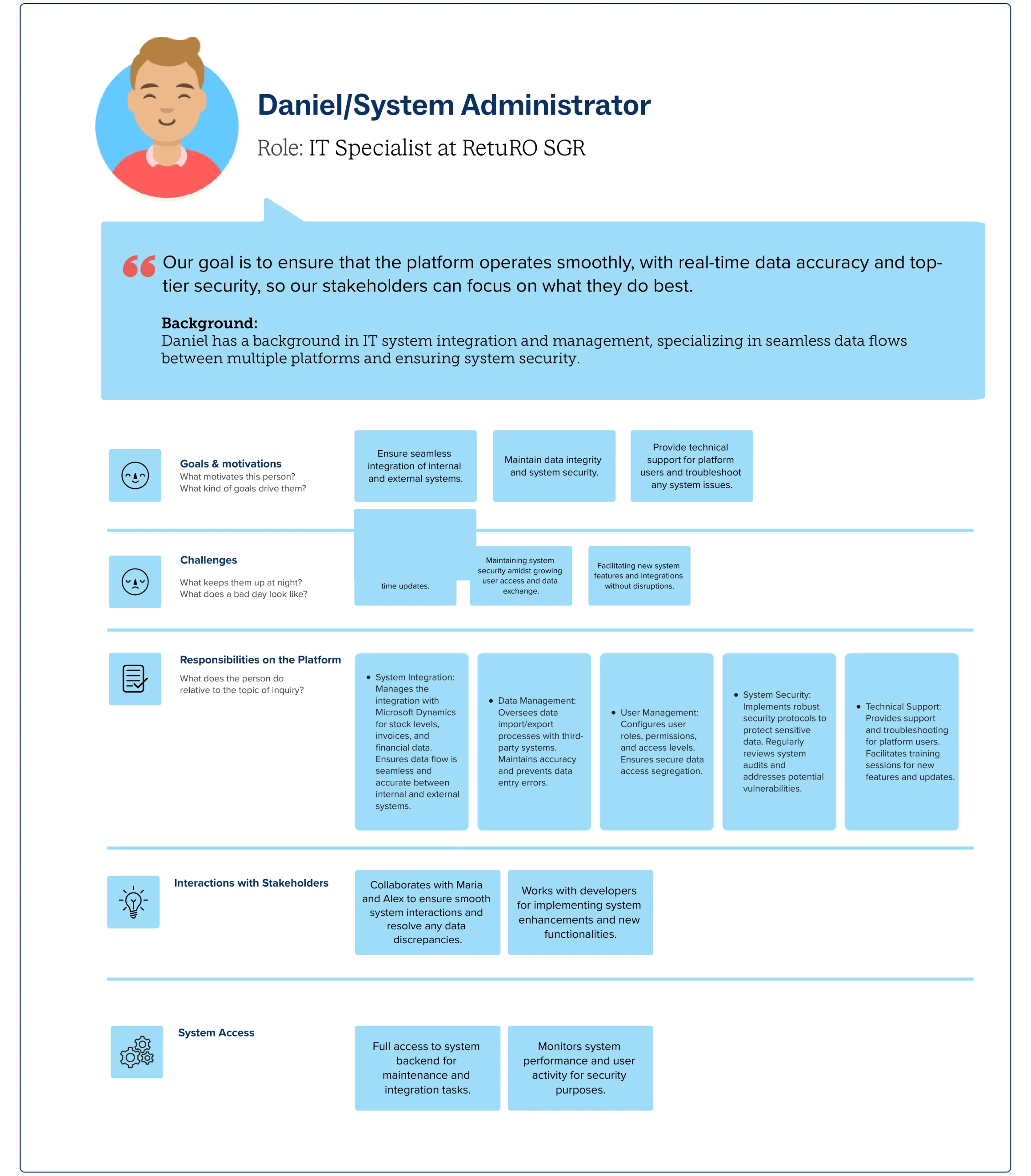
USER RESEARCH - PERSONAS
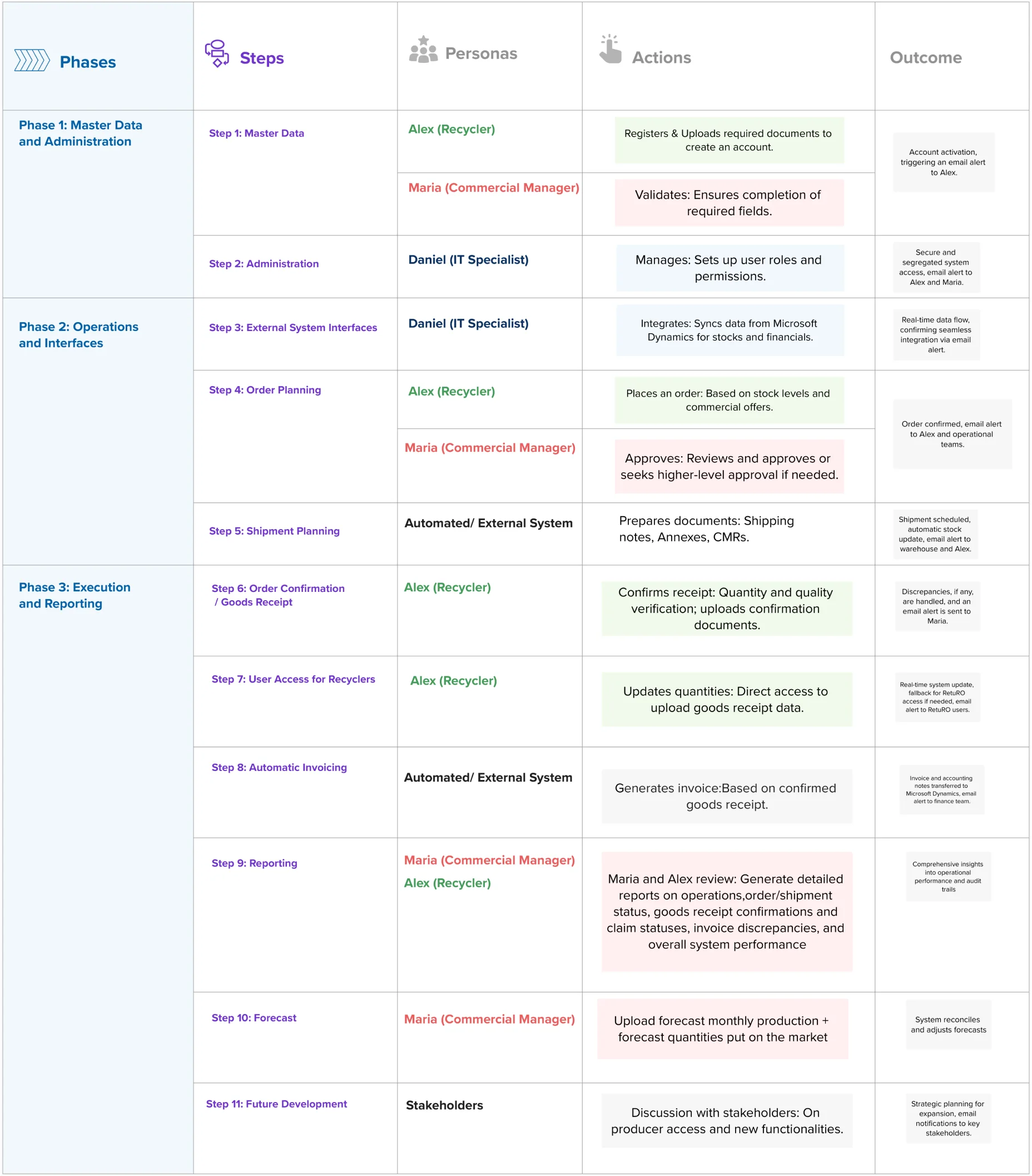
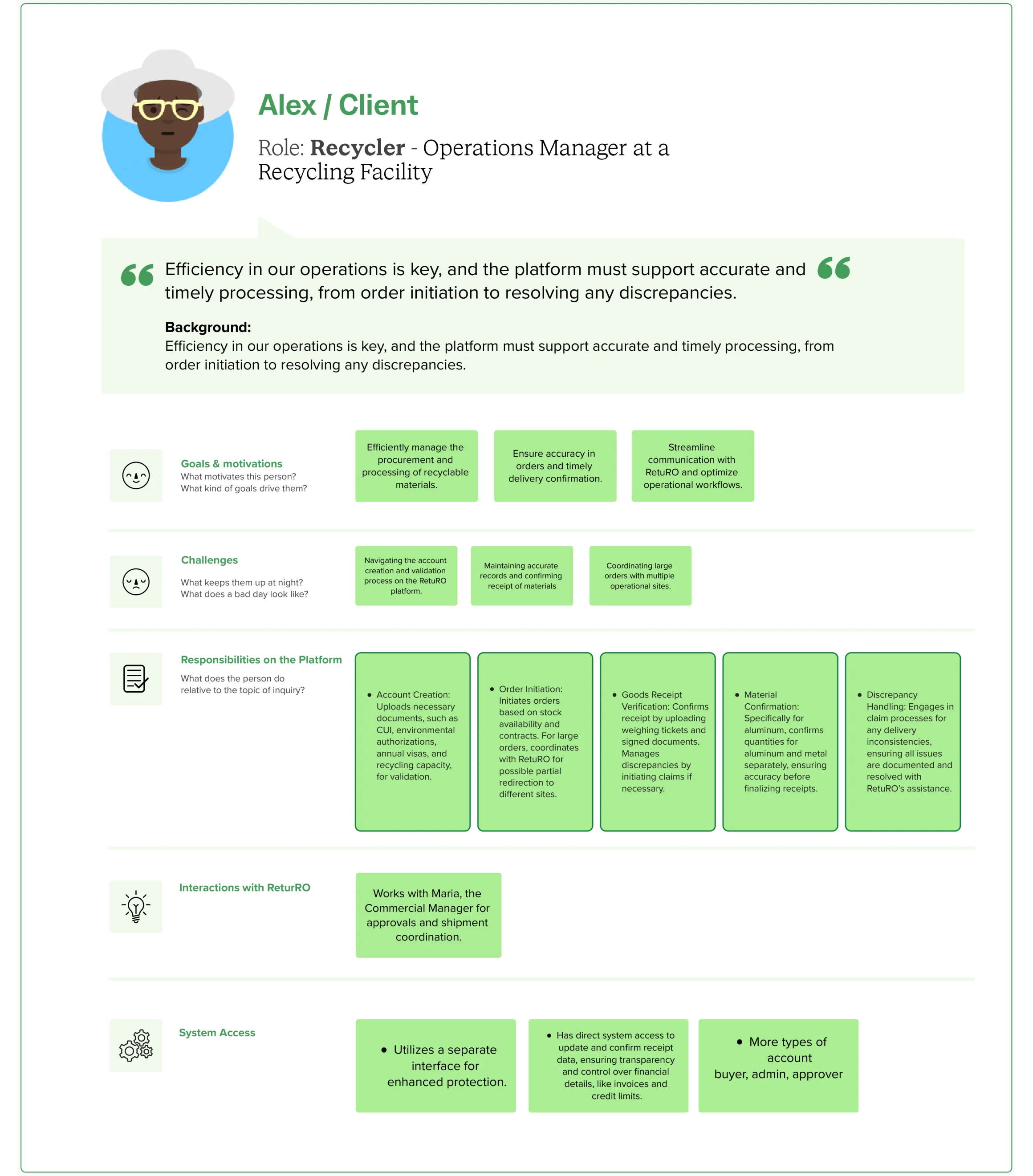
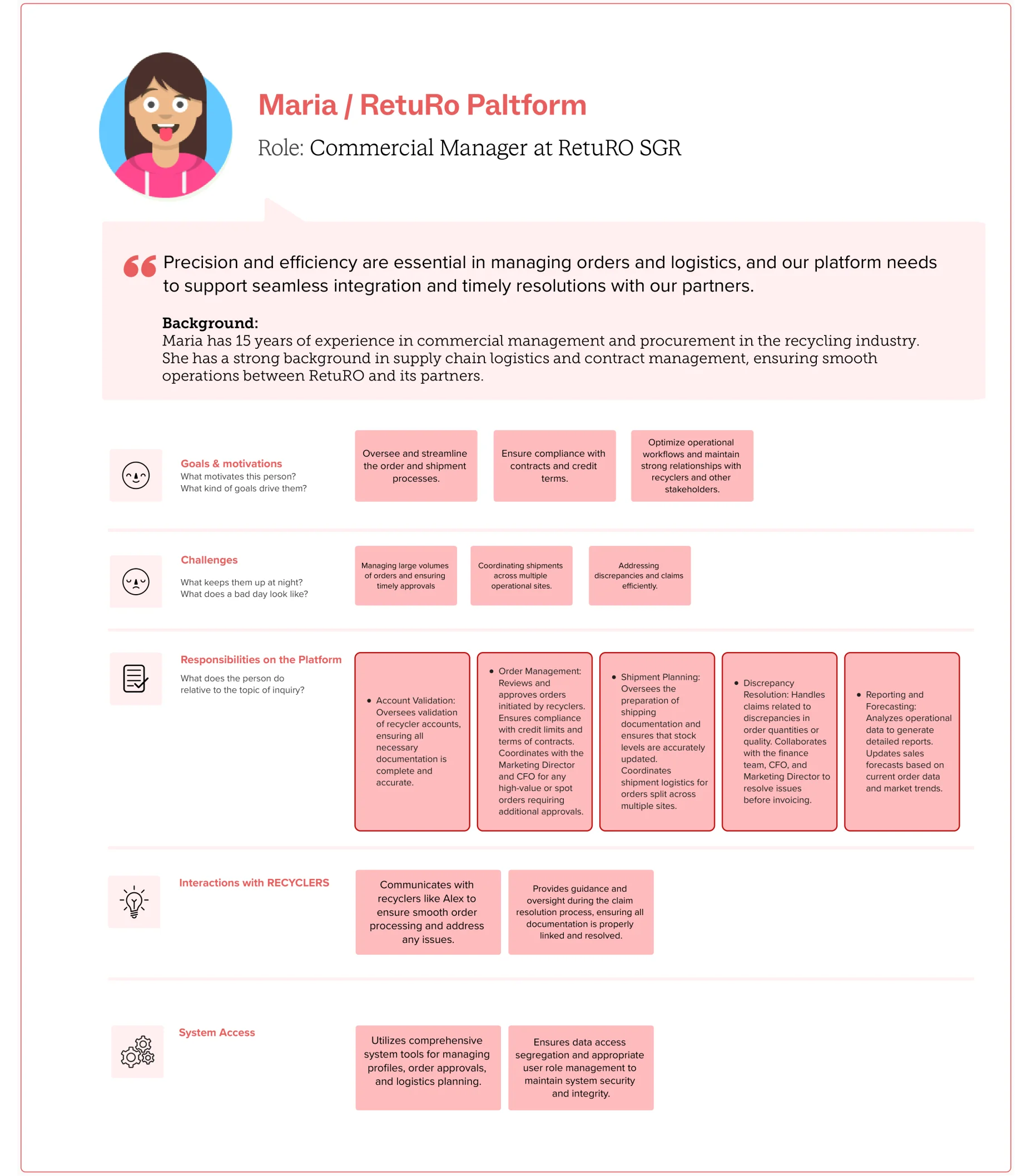
Three distinct user types with divergent platform needs
Persona insights were derived from RFP documentation and stakeholder analysis rather than direct user interviews — a constraint of the proposal context that I navigated by grounding each persona in the operational responsibilities and pain points described in the client brief.
DEFINE & SOLUTION
Define
Based on the research we defined the following priorities: intuitive interfaces for diverse user roles, a significant reduction in order processing time and data entry errors, resolution of the bottlenecks users face in order management and support, and the opportunity to leverage AI to streamline interactions, enhance accuracy, and improve decision-making.
Solution
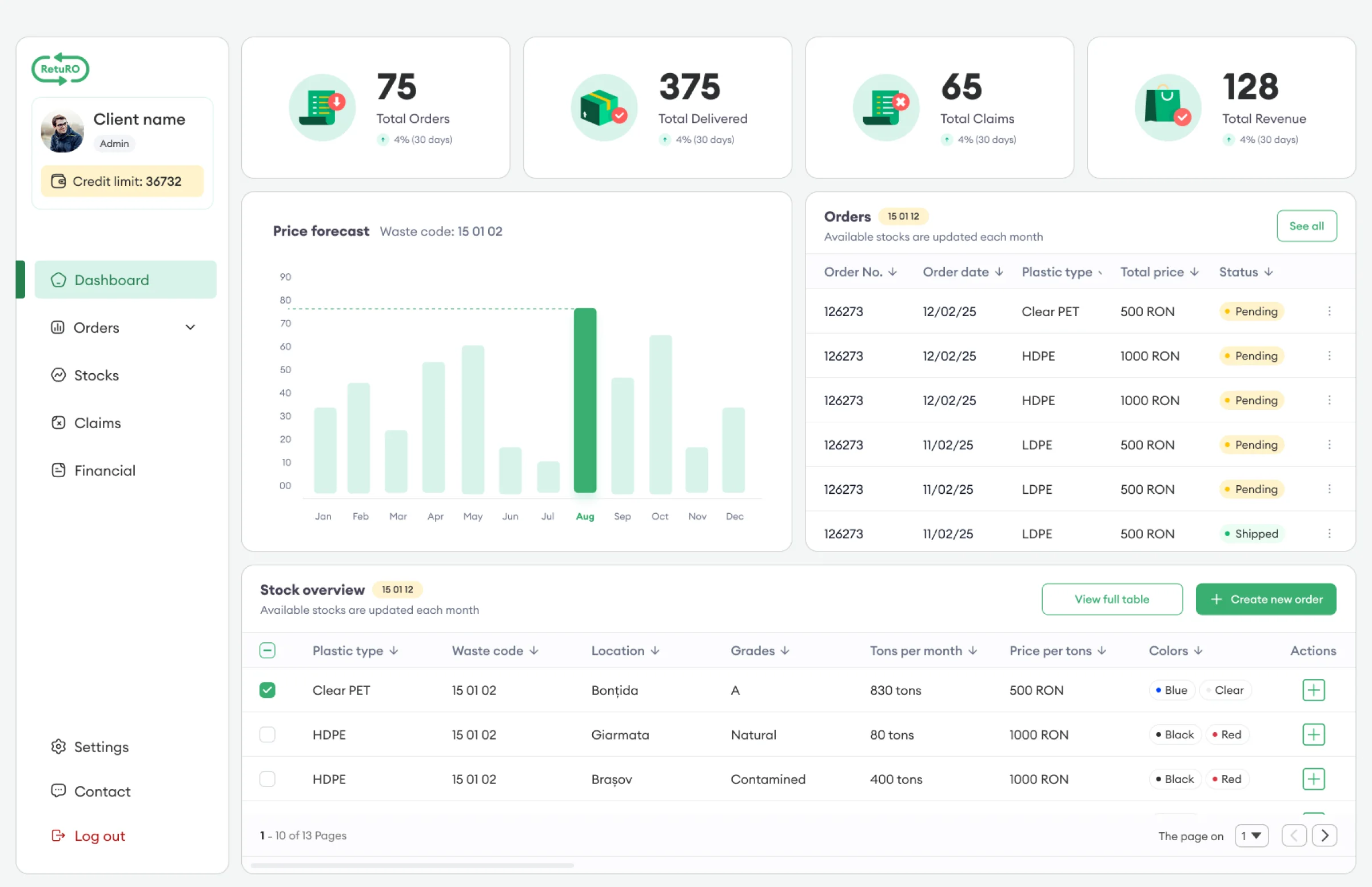
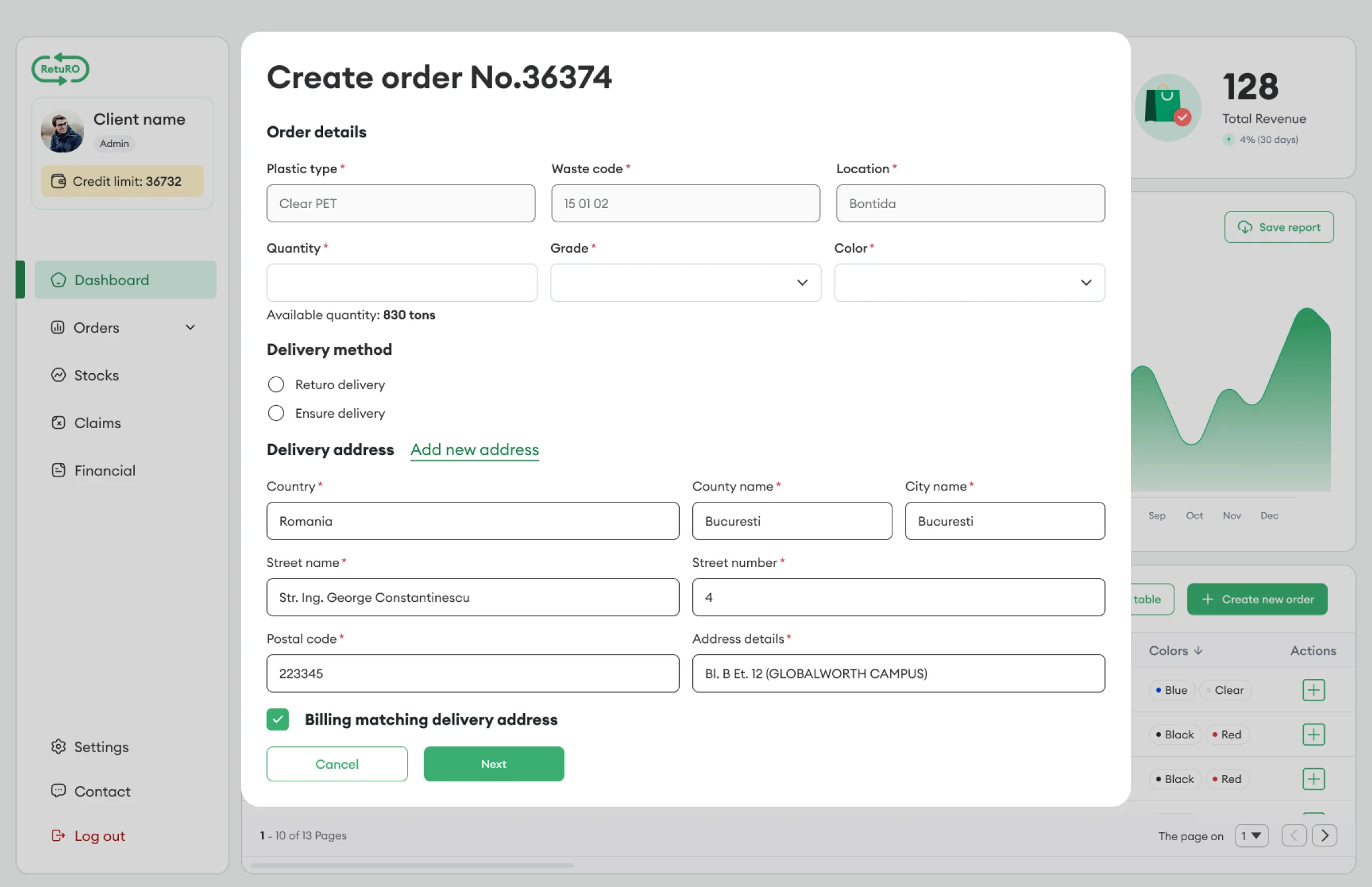
Real-time dashboards monitor collection points, sorting centres, and stock levels across material types. Order management is simplified with an intuitive interface for viewing, approving, or rejecting orders, with timely notifications. Financial dashboards deliver clear insights into revenue, expenses, and profitability, while integration with accounting systems streamlines invoice and payment processes. Interactive maps offer geographical views of stock distribution across RVM machines and processing plants. A material marketplace allows users to browse and find waste materials by type, grade, and price.
AI INTEGRATION
Strategic recommendations proposed beyond the RFP scope
Beyond the functional requirements of the RFP, I identified four AI-driven directions that could significantly enhance user efficiency and platform intelligence. These were included as strategic recommendations in the proposal.
KEY DESIGN DECISIONS
Strategic calls made under constraint — not just design execution
1
2
Redesigned key flows within GIL and SWAN constraints
Legacy backend systems (GIL and SWAN) imposed hard limits on what could be built. Rather than working around constraints at surface level, we redesigned the underlying flows — commission tracking, claims submission, user admin — to deliver modern UX within the technical boundaries, not despite them.
Flow redesign
Legacy constraints
GIL · SWAN
3
Delivered to production without complete requirements
Requirements were not finalised when design work began. Rather than blocking delivery, we started with what was known — accepting that extra iterations would follow. This decision kept the project moving and allowed development to begin while design continued to evolve. Multiple iteration rounds were built into the process from the start.
Agile delivery
Extra iterations
Production delivery
4
Multi-stage approval — internal critique → BA → SME sign-off
Design proposals went through internal team critique before reaching stakeholders. Multiple design directions were explored and debated internally — only the strongest proposals moved forward to Business Analysts and Subject Matter Experts for approval. This process ensured design decisions were evidence-based before entering stakeholder review.
Internal critique
BA approval
SME sign-off
Stakeholder management
REFLECTION
What I learned
Bupa taught me that the most complex UX challenge isn't designing for users - it's designing within systems that weren't built for modern UX. Navigating GIL and SWAN sharpened my ability to advocate for design decisions with technical rationale. The user interviews revealed that manual workarounds had become standard - a sign of systemic UX debt that needed architectural change, not just Ul polish.